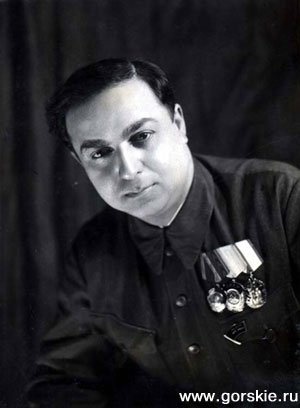
The Red Village, 1907
Yakov Mikhailovich Agarunov was born on 25 April 1907 in the Jewish Sloboda near Quba — today Krasnaya Sloboda, the “Red Village” — the historic heart of the Mountain Jews of the Caucasus, and still one of the only places in the former Soviet Union where Jews live as a compact community. His father was a gardener. Yakov attended a traditional Jewish school and, from 1915, a Russian school at the same time.
He came of age with the revolution. In 1920, at thirteen, he became one of the first Komsomol activists among the Mountain Jews — and, the same year, wrote his first verses.
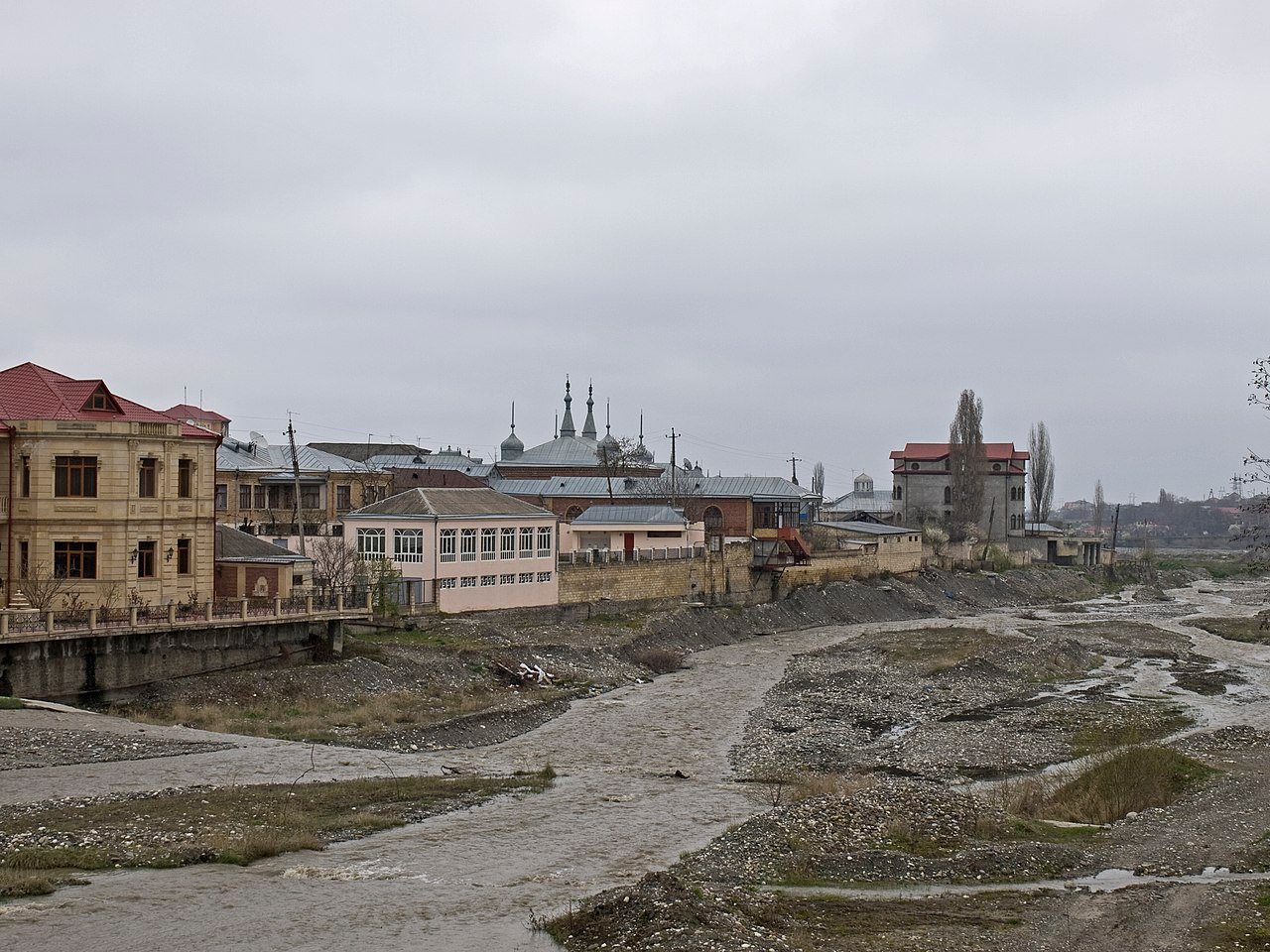
A Komsomol awakening
Through the 1920s Agarunov rose as both an activist and a man of letters. He studied at workers’ faculties in Moscow and Baku, then at the History Faculty of the Baku Pedagogical Institute and the Higher Party School. He threw himself into the cultural awakening of his people — the new Judeo-Tat alphabet, the first Tat-language theatre and press — work explored in full on the next page.
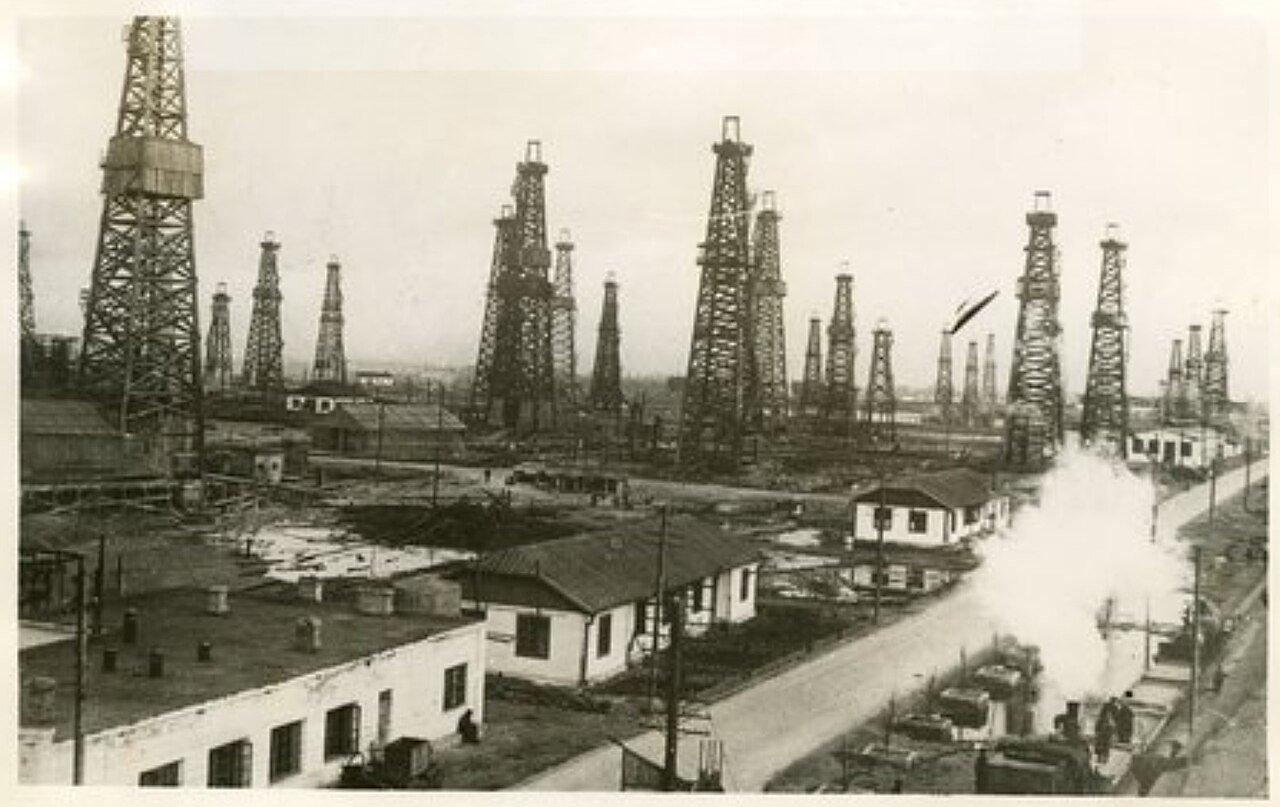
Baku: oil and the Party
From 1932 Agarunov worked in the apparatus of the Communist Party of Azerbaijan, and from 1934 to 1938 edited the Judeo-Tat newspaper «Kommunist» in Baku. In 1938 he became First Secretary of the Ordzhonikidze district — Baku’s largest oil-producing district — and within two years had made it a leading oil region of the USSR. In 1941 he became secretary of the Baku city committee for the oil industry, the year Baku’s wells hit a record 23.5 million tons.
1942: the Second Baku
In the autumn of 1942, as the Wehrmacht drove toward the Caucasus and its oil, more than ten thousand Baku oil specialists were evacuated east. Agarunov led over five thousand of them to the Kuibyshev region to develop the “Second Baku,” the Volga–Urals oil province that would keep Soviet tanks and planes moving. As secretary of the Kuibyshev regional committee for oil (1942–1947) he drove its output sharply upward; in 1943 he received the Order of Lenin.
After the war
He returned to Baku as a secretary of the city party committee (1947–1950), and later served as deputy director of an institute for safety in the oil industry. He was a member of the Central Committee of the Communist Party of Azerbaijan and a deputy of the republic’s Supreme Soviet. In retirement he turned back to the work of his youth — the history and language of his people.
Baku, 1992
Yakov Agarunov died on 31 May 1992 in Baku, at eighty-five, and is buried there. His memoir of the Mountain Jews, The Great Destiny of a Small People, appeared posthumously in 1995. His son Mikhail Agarunov, a chemist and scholar, spent decades preserving the family archive, republishing his father’s memoirs and completing his Judeo-Tat dictionaries.
Note: this is a thinly-documented life. Sources differ on his exact role at the Derbent newspaper «Zakhmetkesh» and on some wartime production figures; these are flagged on the next pages rather than smoothed over. (He is not related to Albert Agarunov, the 1990s war hero — only the common surname is shared.)