The first poem in Tat
In 1920, at the age of thirteen, Agarunov wrote «Kovter» — “The Dove.” It is remembered as the very first poetic work composed in the Judeo-Tat (Juhuri) language. The dove rising into the sky stood for his own small people, awakening to a new life — and for a tongue that had never before been set to verse.
An alphabet for a people
A spoken language is one thing; a written, teachable, printable one is another. In April 1929, at the All-Union Conference on cultural construction among the Mountain Jews in Baku, Agarunov headed the group that created the Latin-based Judeo-Tat alphabet. For the first time his people could be taught, and could publish, in a standardized script of their own. He later compiled Judeo-Tat↔Russian dictionaries of some nine thousand words — completed and published after his death by his son.
Plays, translations, a literature
Around his poetry he built the beginnings of a modern Tat-language culture — drama staged in the Mountain-Jewish theatres of Baku and Derbent, and translation that opened other literatures to his readers:
The newspaperman
Agarunov was also a pioneer of the Mountain-Jewish press. From 1934 to 1938 he was chief editor of the Judeo-Tat newspaper «Kommunist» in Baku, and concurrently deputy director of the Azerbaijan State Publishing House, overseeing all Tat-language books. In 1929 he was sent to Derbent to work on the first Tat periodical, «Zakhmetkesh» (“The Labourer”).
Sources disagree about «Zakhmetkesh»: STMEGI describes Agarunov as its founder, while gorskie.ru and the Jewish encyclopedias credit others and place him there as deputy editor (1929). His Baku editorship of «Kommunist» (1934–38) is undisputed; the Derbent founding claim is not, and we present it cautiously.
Oil and victory
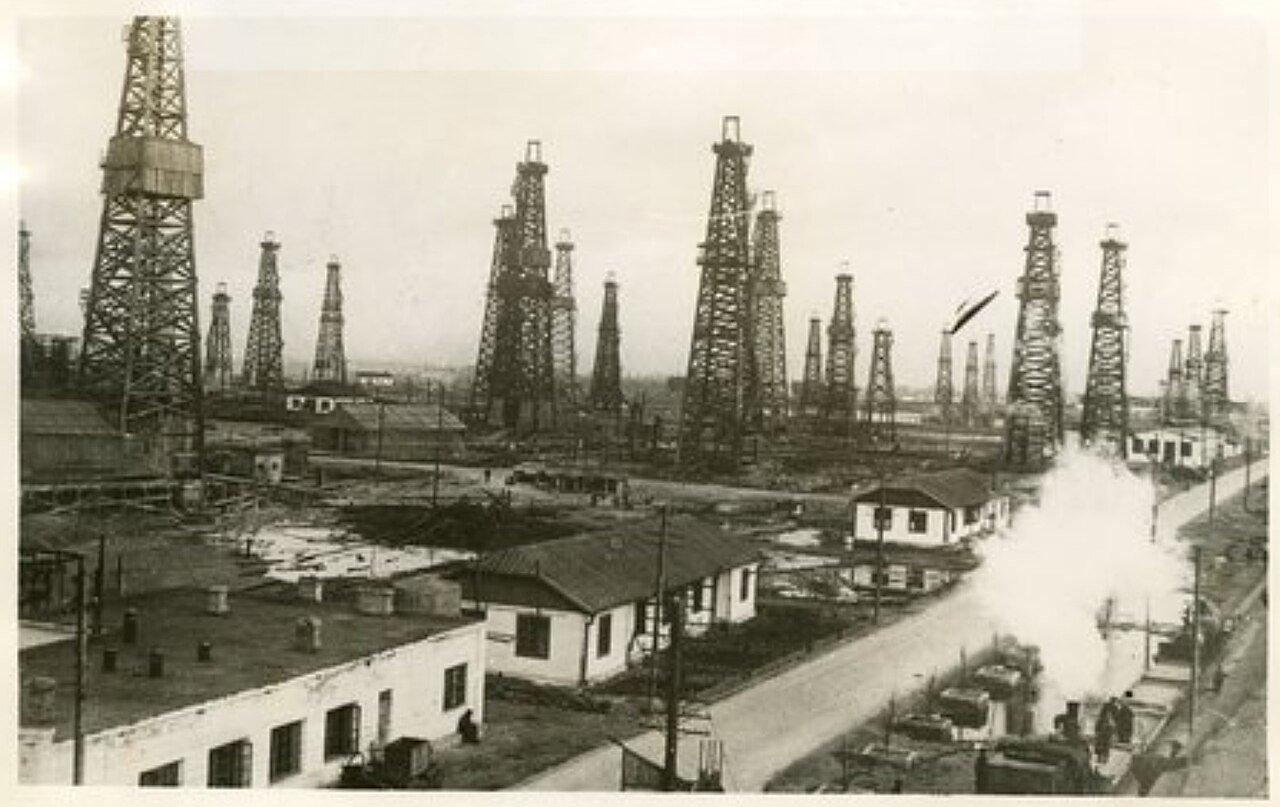
His other calling was as concrete as steel. Baku’s oil fuelled the Soviet Union, and Agarunov spent the 1930s and 40s helping run it — first as Party secretary of its largest producing district, then, in 1941, as the Baku city secretary for the oil industry in the record year of 23.5 million tons.
When the front neared the Caucasus in 1942, the centre of gravity shifted east. Leading thousands of Baku specialists to the Volga, Agarunov became secretary of the Kuibyshev regional committee for oil and a builder of the “Second Baku.” Community accounts credit his tenure with raising the region’s output many times over and bringing in the first Soviet oil from deep Devonian rock in 1944.
The most dramatic production multipliers come mainly from community and regional accounts (OurBaku); the broad story — Baku oil secretary, evacuation to Kuibyshev, the “Second Baku,” the 1943 Order of Lenin — is well attested.